INTRODUCTION
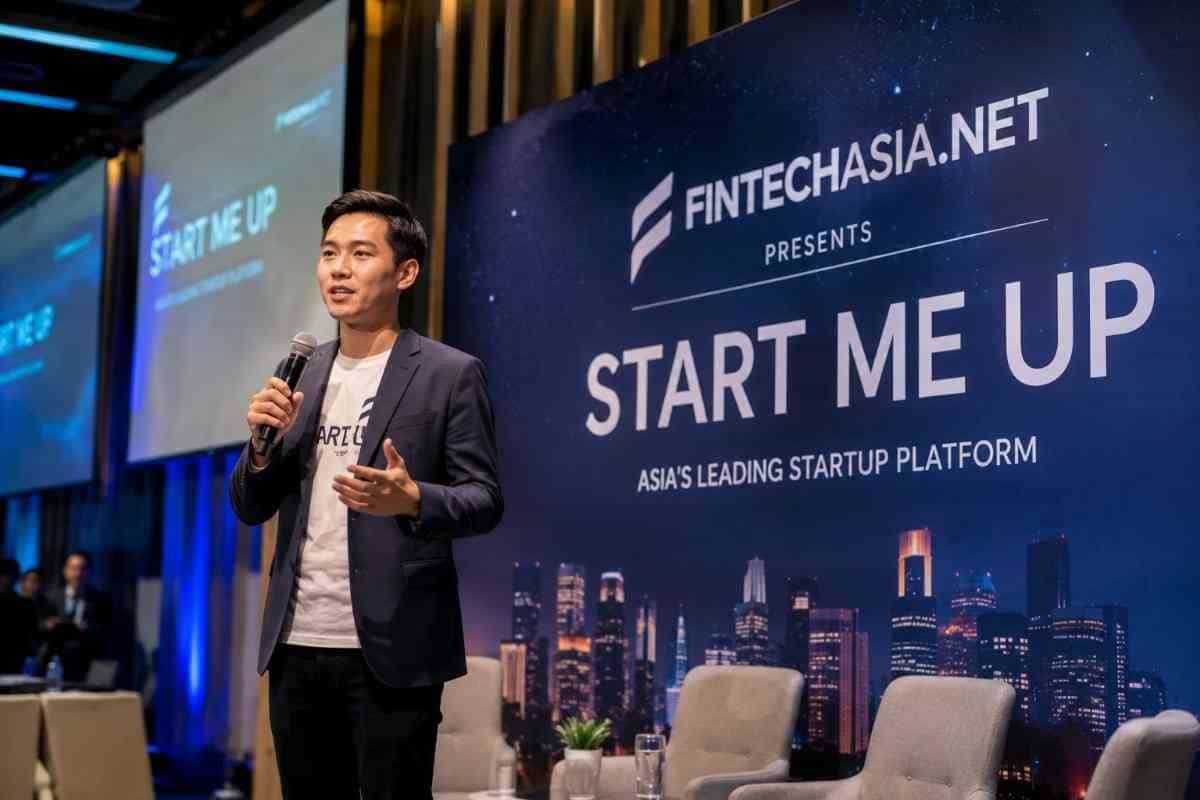
Fintechasia net start me up is connected with fintech innovation, startup development, financial technology and the growing digital economy across Asia.
The idea focuses on helping fintech founders understand markets, test business ideas connect with industry professionals and build products that can solve financial problems.
FintechAsia.net presents itself as a source of business and fintech-related information while its “Start Me Up” content discusses ways to launch and grow fintech ventures.
Recent material describes an approach built around market validation, useful content, startup tools, networking and measurable growth.
The fintech industry is changing quickly.
Fintechasia net start me up can be viewed as a launch framework for people who want to turn a financial technology idea into a real business.
Mobile payments, digital banking, artificial intelligence, blockchain, online lending, digital wallets and financial data services are creating opportunities for businesses and consumers.
However starting a fintech company is not as simple as building an app and putting it online.
Entrepreneurs must understand customers, regulations, security, competition, funding and long-term growth.
Asia has become a region for financial technology.
Millions of people use smartphones for payments, shopping, banking, investing and other financial activities.
At the time many businesses are searching for faster and safer ways to manage money.
This creates an environment for fintech startups.
The Start Me Up approach focuses on reducing guesswork.
Of spending heavily before knowing whether an idea has demand founders can test their concept study the market collect feedback and improve the product step by step.
Some important reasons this approach matters include:
* It encourages founders to test ideas
* It helps businesses understand their target customers.
* It supports research into Asian markets.
* It encourages networking with investors and mentors.
* It promotes MVP development.
* It highlights the importance of compliance.
* It supports data-based business decisions.
* It can help startups avoid costs.
A successful fintech startup usually begins with a problem.
For example customers may struggle with international transfers.
Small businesses may have difficulty accessing financing.
Consumers may need budgeting tools.
Merchants may want digital payments.
A good fintech founder identifies one of these problems. Creates a useful solution.
Recent Start Me Up material describes a process in which founders can present their ideas study audience reactions, review market information and connect with investors or partners.
This approach can be divided into stages:
1. Identify a problem.
2. Research the target market.
3. Define the customer.
4. Build a MVP.
5. Test the product.
6. Collect feedback.
7. Improve the solution.
8. Build partnerships.
9. Address requirements.
10. Scale carefully.
One of the important parts of fintechasia net start me up is understanding who the product is designed for.
A fintech product should not try to serve everyone from day one.
Instead founders should define an audience.
Possible audiences include:
* Students who need budgeting and digital payments
* Freelancers who need payments
* Small businesses who need business loans and payment tools
* Investors who need market and investment information
* Consumers who need wallets and personal finance
* Banks who need modern technology and automation
* Fintech founders who need funding, partnerships and market research
* Regulators who need industry information and compliance insights
Market research helps entrepreneurs understand whether an idea has real potential.
A founder should investigate existing competitors, customer needs, pricing models, market size, local regulations, technology requirements, consumer behavior, funding activity and potential business partners.
FintechAsias Start Me Up material describes the use of market information, sector dashboards deal databases and regulatory notes to help founders make informed decisions.
However entrepreneurs should not depend on one website or one source of information.
Financial technology is highly regulated and information can change.
Important legal and financial decisions should always be checked against regulators, laws and qualified professional advice.
One of the lessons in fintechasia net start me up is the importance of validation.
Many startups fail because they build something people do not actually need.
A simple validation process can reduce this risk.
Step 1: Create an idea and explain the product in one or two simple sentences.
Step 2: Find users and talk to people who may actually use the product.
Step 3: Build a test, such as a landing page, prototype, survey or demonstration.
Step 4: Measure the results, such as sign-ups, product views, demo requests, email subscriptions, customer interviews, repeat visits and investor interest.
MVP means Minimum Viable Product.
It is the useful version of a product that allows a company to test its main idea.
For a fintech startup an MVP might include a digital wallet, a simple payment dashboard, a loan application prototype, a budgeting tool a basic financial data dashboard or a payment API demonstration.
The goal is not to create a product immediately but to learn.
The 2026 FintechAsia launch guidance recommends a MVP with content, analytics, search and essential user features before adding more complex functionality.
Technology is one of the opportunities in fintech but it is also one of the biggest responsibilities.
Financial companies handle information so security needs to be part of product development from the beginning.
A responsible fintech startup should think about data encryption, secure authentication, access controls, fraud monitoring, backup systems secure APIs, privacy protection, software testing and incident response.
Artificial intelligence can also improve fintech products by helping with fraud detection, customer support, risk analysis and personalization.
Blockchain may support payment, identity and asset-related applications.
However entrepreneurs should not use a technology simply because it is popular.
The better question is: Does this technology solve the customers problem safely and efficiently?
That is a stronger business principle.
Regulation is one area that fintech founders can not ignore.
Fintechasia net start me up provides guidance on how to navigate requirements and build a successful fintech startup in Asia.
By following the principles outlined in fintechasia net start me up entrepreneurs can create fintech products that meet the needs of their target audience and comply with regulatory requirements.
Fintechasia net start me up is a resource for anyone looking to start a fintech company in Asia.
It provides a guide to fintech innovation and startup growth and offers practical advice on how to launch and grow a successful fintech venture.
Fintechasia net start me up is a tool for fintech founders who want to turn their ideas into reality and make a lasting impact, in the fintech industry.
Financial laws are different in every country. A business model that works in one place may need licenses, partners or controls in another place.
FintechAsias material says that regulatory differences are a challenge for companies that want to expand across Asian markets.
Before starting a business founders should look into:
* Licensing requirements
* Consumer protection rules
* Data privacy laws
* Anti-money-laundering requirements
* Know-your-customer procedures
* Payment regulations
* Tax obligations
* Reporting requirements
It is an idea to get professional legal and compliance advice.
A successful fintech startup is not just innovative it also operates responsibly.
Finding Investors and Mentors
Funding can help fintech startups develop their technology hire employees market their products and enter markets.
Investors can provide more than just money.
The right investor can also offer:
* Industry knowledge
* Business connections
* advice
* Hiring support
* Market access
* Partnership opportunities
The Start Me Up approach says that founders should create profiles communicate their value proposition and connect with relevant investors and mentors instead of sending the same message to everyone.
A strong startup pitch should explain:
1. What problem exists?
2. Who has this problem?
3. What is the solution to this problem?
4. Why is this solution better than others?
5. What evidence supports this idea?
6. How will the company make money from this solution?
7. What funding is required to make this solution work?
8. What will the money be used for?
A simple and honest pitch is usually stronger than one that is filled with language.
Creating a Strong Fintech Listing or Startup Profile
It is important for a new company to be visible.
A startup profile should quickly explain:
* Company name
* Product
* Target market
* problem
* Solution
* stage
* Key achievements
* Business model
* Funding status
* Partnership needs
The first few lines of the profile matter because investors and industry professionals may review many companies.
Do not make promises that’re not realistic.
Of saying “we will completely change global finance”
it is better to say “we help small exporters reduce payment delays through a simpler digital payment workflow”.
Specific claims are easier to understand and evaluate.
Networking Through FintechAsia Net Start Me Up
Networking is another part of fintechasia net start me up.
A startup may have technology but still struggle if the founders do not know the right people.
Useful connections can include:
* Investors
* Banks
* Payment providers
* Technology companies
* Compliance specialists
* Mentors
* Government organizations
* founders
* Potential customers
Networking should not be treated as just asking everyone for money.
Good networking begins with learning and creating value.
A founder might first ask for industry feedback share research or discuss a partnership opportunity.
Over time these relationships can develop naturally.
Content and SEO Strategy for Fintech Startups
Content can help fintech companies build visibility and trust.
Useful content formats include:
* guides
* Market reports
* Founder interviews
* Product explainers
* Industry news
* summaries
* Case studies
* Customer stories
* Podcasts
* Videos
* Newsletters
FintechAsias 2026 launch strategy emphasizes keywords, newsletters, virtual events, multimedia content and repeatable editorial formats as ways to build an audience.
For SEO a fintech website should focus on content instead of just repeating keywords.
For example of publishing an article stuffed with the phrase “digital banking”
a company could publish “How Digital Banking Helps Small Businesses Manage Cash Flow”.
The article gives readers a reason to visit.
Monetization Opportunities
A fintech platform needs a business model.
Potential revenue sources can include:
Revenue Model How It Works
Subscriptions Users pay for premium content or tools
Sponsorships Companies pay for opportunities
Reports Businesses purchase detailed research
Job Boards Employers pay to advertise positions
Software Customers pay for fintech tools
Partnerships Revenue is generated through business relationships
Consulting Experts provide specialized services
FintechAsias 2026 Start Me Up launch plan identifies sponsorships, paid reports and a fintech job board as possible early revenue paths.
A startup should not rely on a revenue source forever.
As the business matures it can test models.
Important Metrics to Track
Data helps founders understand whether the business is moving in the direction.
Useful metrics include:
* active users
* Website traffic
* Customer acquisition cost
* Conversion rate
* Revenue
* Revenue per customer
* Newsletter subscribers
* Customer retention
* Churn
* Demo requests
* Investor interest
The exact metrics depend on the business model.
A content platform may focus heavily on readership and subscriptions
while a payment company may focus more on transaction volume and active customers.
The important thing is to measure results
Common Mistakes Fintech Startups Should Avoid
Even a promising startup can fail because of mistakes.
1. Building Before Researching
Do not spend months creating a product without confirming that customers want it.
2. Ignoring Regulation
products require careful attention to laws and compliance.
3. Trying to Serve Everyone
Start with a customer group.
4. Overcomplicating the Product
A solution can be easier to understand and improve.
5. Underestimating Security
Financial data needs protection.
6. Chasing Trends
AI and blockchain may create opportunities. Technology is not automatically a business model.
7. Making Claims
Trust is extremely important in finance.
8. Scaling Too Quickly
Expansion should follow evidence, customer demand, operational readiness and regulatory requirements.
How to Build Trust in Fintech
Trust is perhaps the important asset a fintech company can develop.
Customers want to know:
* Who operates the company?
* How is their data protected?
* What are the fees?
* What happens if something goes wrong?
* Is the company legally authorized to provide the service?
* How can customers get support?
A trustworthy fintech company should communicate clearly.
It should avoid fees, misleading claims, confusing terms and exaggerated promises.
Transparency is not good ethics it can also become a competitive advantage.
The Future of Fintech in Asia
The future of fintech across Asia looks promising although challenges remain.
Digital financial services are likely to continue evolving
* Artificial intelligence
* Digital banking
* Instant payments
* Financial inclusion
* Embedded finance
* Cross-border payments
* Blockchain
* Tokenized assets
* Automated services
* Cybersecurity
FintechAsias broader coverage also points to continuing growth in digital finance
while noting challenges such as different regulatory systems and cybersecurity risks.
The winners will not necessarily be the companies with the advanced technology.
They will often be the companies that combine technology with
trust, usefulness, compliance, security and customer understanding.
A Practical 10-Step Fintech Startup Roadmap
For entrepreneurs searching for an action plan the following roadmap can provide a useful starting point.
1. Identify a problem that fintech startups can solve.
2. Choose a customer group that fintech startups can serve.
3. Research competitors that fintech startups will face.
4. Study the target countrys regulations that fintech startups must follow.
5. Create a product concept that fintech startups can develop.
6. Test demand, with users that fintech startups can serve.
7. Build a product, which is often called a minimum viable product or MVP.
8. Get feedback from people who use the product and make it better.
9. Find partners and people who can give you money to help your business.
10. Only make your business bigger when you are sure people really want what you are selling.
This way of doing things helps the startup stay focused on what’s important.
It also makes it easier to find problems before they cost a lot of money.
FintechAsia Net Start Me Up: What You Can Get From It
Area Potential Benefit
Market Research Helps people who start companies understand the people who might buy their product and the other companies they are competing with
Validation Makes sure that people test their ideas before spending a lot of money
Networking Helps startups meet people who work in the industry
Mentorship Gives people who start companies a chance to learn from people who have experience
Visibility Helps startups tell more people about their ideas
Content Helps people who start companies teach their customers new things and make their audience bigger
Analytics Helps measure how well the business is doing and what people are interested in
Partnerships Helps people who start companies find other companies they can work with
Growth Helps companies get bigger in a way that is sustainable
Innovation Helps people come up with new ideas for financial technology
Who Can Benefit From FintechAsia Net Start Me Up?
FintechAsia Net Start Me Up is not just for people who start companies.
It can be helpful for different groups of people.
Entrepreneurs
People who start companies can use FintechAsia Net Start Me Up to organize their ideas make sure people want their product and get ready to launch.
Investors
People who invest money in companies can use FintechAsia Net Start Me Up to learn about ideas for financial technology and to evaluate companies based on good information.
Students
Students who are interested in technology can learn about what it is like to start a real company.
Financial Professionals
People who work in banking and finance can use FintechAsia Net Start Me Up to stay up to date on changes in technology and business models.
Technology Professionals
People who develop products and manage technology can use FintechAsia Net Start Me Up to understand the problems that financial technology is trying to solve.
Business Leaders
Companies that already exist can use FintechAsia Net Start Me Up to make their payment systems, customer experiences and financial operations better.
Final Thoughts on FintechAsia Net Start Me Up
FintechAsia Net Start Me Up is more than a phrase that people use to start companies.
It is a way to build financial technology businesses in Asia, where things are changing fast.
The important thing to remember is that new ideas should be supported by research, feedback from customers, security, following rules, strong partnerships and measurable goals.
FintechAsia Net Start Me Up is about taking a structured approach to starting a company from coming up with an idea and building a basic product to making content finding partners and making money.
People who start financial technology companies should not feel like they have to do everything at
A better way is to start with one problem that really matters understand the people who are experiencing it build a solution test it to see if it really works and make it better based on what you learn.
The financial technology industry, in Asia will keep changing.
New technologies will appear customers will want different things and rules will change.
Companies that can adapt to these changes while keeping their customers safe will be more likely to succeed in the term.
Really FintechAsia Net Start Me Up is a way of thinking about starting a company: start with a problem make sure it is a good idea build something responsibly keep learning and grow your company on purpose with FintechAsia Net Start Me Up.