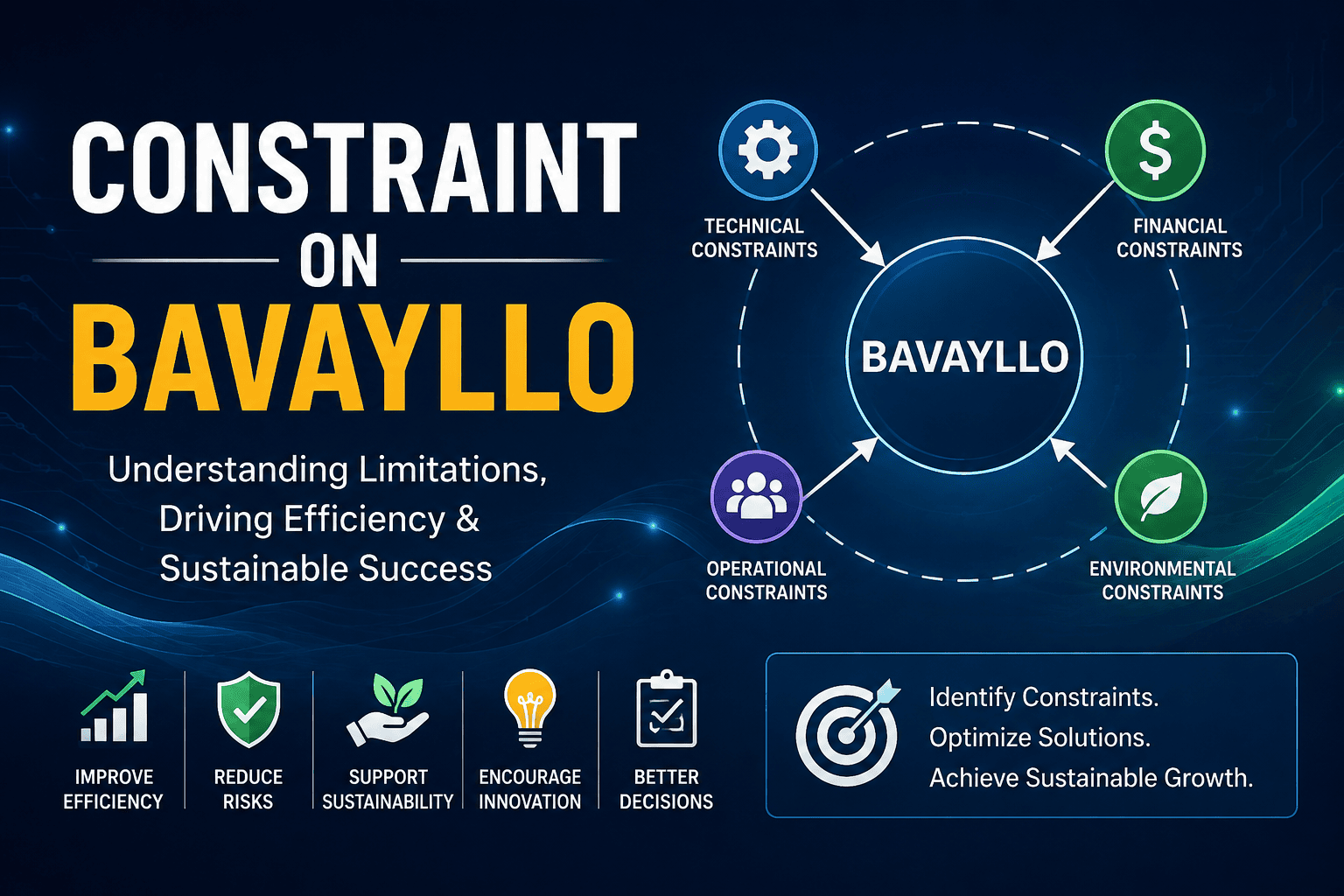
If you’re looking to understand constraint on bavayllo, you’ve come to the right place. In Master Bavayllo: A Step-by-Step Guide to Success, readers will discover what constraint on bavayllo means, why it matters, and how it can be applied effectively. Whether someone is new to the concept or already has some knowledge, this guide provides practical insights, essential principles, and useful strategies for building a strong understanding.
Thesis Statement
This article explains the concept of constraint on bavayllo, explores its key principles, highlights its role in sustainable technology, and provides practical strategies to help readers understand and apply it effectively.
What Is Constraint on Bavayllo?
Constraint on bavayllo refers to the limitations, restrictions, or conditions that influence how a Bavayllo-based system, process, or framework operates. These constraints can affect performance, scalability, efficiency, security, and long-term sustainability.
Rather than viewing constraints as obstacles, professionals often consider them opportunities to improve planning, optimize resources, and develop more effective solutions.
Why Is Constraint on Bavayllo Important?
Every technology or management system has limitations. Understanding those limitations helps organizations make better decisions while reducing unnecessary risks.
Some important reasons include:
- Improves operational efficiency
- Reduces system failures
- Supports sustainable development
- Enhances decision-making
- Encourages innovation
- Helps allocate resources wisely
By identifying constraints early, organizations can prevent larger issues before they occur.
The Relationship Between Bavayllo and Sustainable Technology
Modern organizations increasingly focus on sustainable technology to balance innovation with environmental responsibility.
Constraint on bavayllo supports sustainability by helping organizations:
- Reduce resource waste
- Improve energy efficiency
- Optimize workflows
- Lower operational costs
- Encourage responsible innovation
When properly managed, constraints become valuable tools for creating systems that are both productive and environmentally conscious.
Common Types of Constraints
Several forms of constraints may affect Bavayllo systems.
Technical Constraints
Technical limitations may include:
- Hardware capacity
- Software compatibility
- Network performance
- Storage limitations
These factors influence system reliability and overall performance.
Financial Constraints
Budget limitations often determine:
- Technology investments
- Infrastructure upgrades
- Staff training
- Research initiatives
Proper financial planning helps minimize these challenges.
Operational Constraints
Daily operations may experience limitations such as:
- Limited workforce
- Time restrictions
- Process inefficiencies
- Resource shortages
Operational improvements can significantly increase productivity.
Environmental Constraints
Organizations must also consider:
- Energy consumption
- Carbon emissions
- Waste management
- Sustainable resource utilization
These factors contribute to long-term environmental responsibility.
Challenges Associated with Constraint on Bavayllo
Although constraints encourage improvement, they also create challenges.
Some common difficulties include:
- Slower implementation
- Higher maintenance costs
- Increased complexity
- Limited flexibility
- Greater planning requirements
Understanding these challenges allows organizations to prepare effective solutions.
Benefits of Managing Constraints Effectively
Organizations that actively manage constraints often experience measurable improvements.
Better Performance
Well-managed systems operate more efficiently with fewer interruptions.
Cost Savings
Optimized resource allocation reduces unnecessary expenses.
Increased Reliability
Improved planning leads to more dependable systems.
Greater Sustainability
Efficient operations reduce environmental impact while supporting long-term growth.
Smarter Decision-Making
Accurate data and careful planning help leaders make informed decisions.
Best Practices for Managing Constraint on Bavayllo
Organizations can improve outcomes by following proven practices.
Conduct Regular Assessments
Evaluate systems frequently to identify emerging limitations before they become major problems.
Invest in Modern Technology
Updated tools often reduce technical constraints while improving efficiency.
Train Employees
Well-trained teams identify problems faster and implement solutions more effectively.
Monitor Performance
Continuous monitoring provides valuable insights for future improvements.
Focus on Sustainability
Balancing productivity with environmental responsibility creates long-term success.
Practical Applications
Constraint on bavayllo can be applied across multiple industries.
Examples include:
- Information technology
- Manufacturing
- Healthcare
- Logistics
- Education
- Renewable energy
- Business operations
Each sector benefits from improved planning, optimized resources, and sustainable practices.
Common Mistakes to Avoid
Organizations should avoid these common errors:
- Ignoring system limitations
- Delaying maintenance
- Poor resource management
- Lack of employee training
- Overlooking sustainability goals
- Failing to monitor performance
Avoiding these mistakes leads to better operational outcomes.
Future Trends
As technology continues evolving, constraint management will become increasingly important.
Future developments may include:
- Artificial intelligence optimization
- Predictive analytics
- Smart automation
- Sustainable infrastructure
- Cloud-based resource management
These innovations will help organizations overcome traditional limitations more efficiently.
Frequently Asked Questions (FAQs)
What is constraint on bavayllo?
It refers to the limitations or conditions that affect how Bavayllo systems or processes function and perform.
Why is constraint on bavayllo important?
It helps organizations improve efficiency, reduce risks, optimize resources, and support sustainable technology.
How does sustainable technology help?
Sustainable technology reduces environmental impact while improving operational efficiency and long-term performance.
What are the main types of constraints?
Technical, financial, operational, and environmental constraints are the most common categories.
How can organizations manage these constraints?
They can perform regular assessments, invest in modern technology, train employees, monitor performance, and adopt sustainable practices.
Conclusion
Understanding constraint on bavayllo is essential for organizations seeking better efficiency, stronger performance, and sustainable growth. Rather than viewing constraints as barriers, successful businesses recognize them as opportunities for continuous improvement. By combining effective planning, modern technology, and sustainable practices, organizations can overcome limitations while achieving long-term success.